
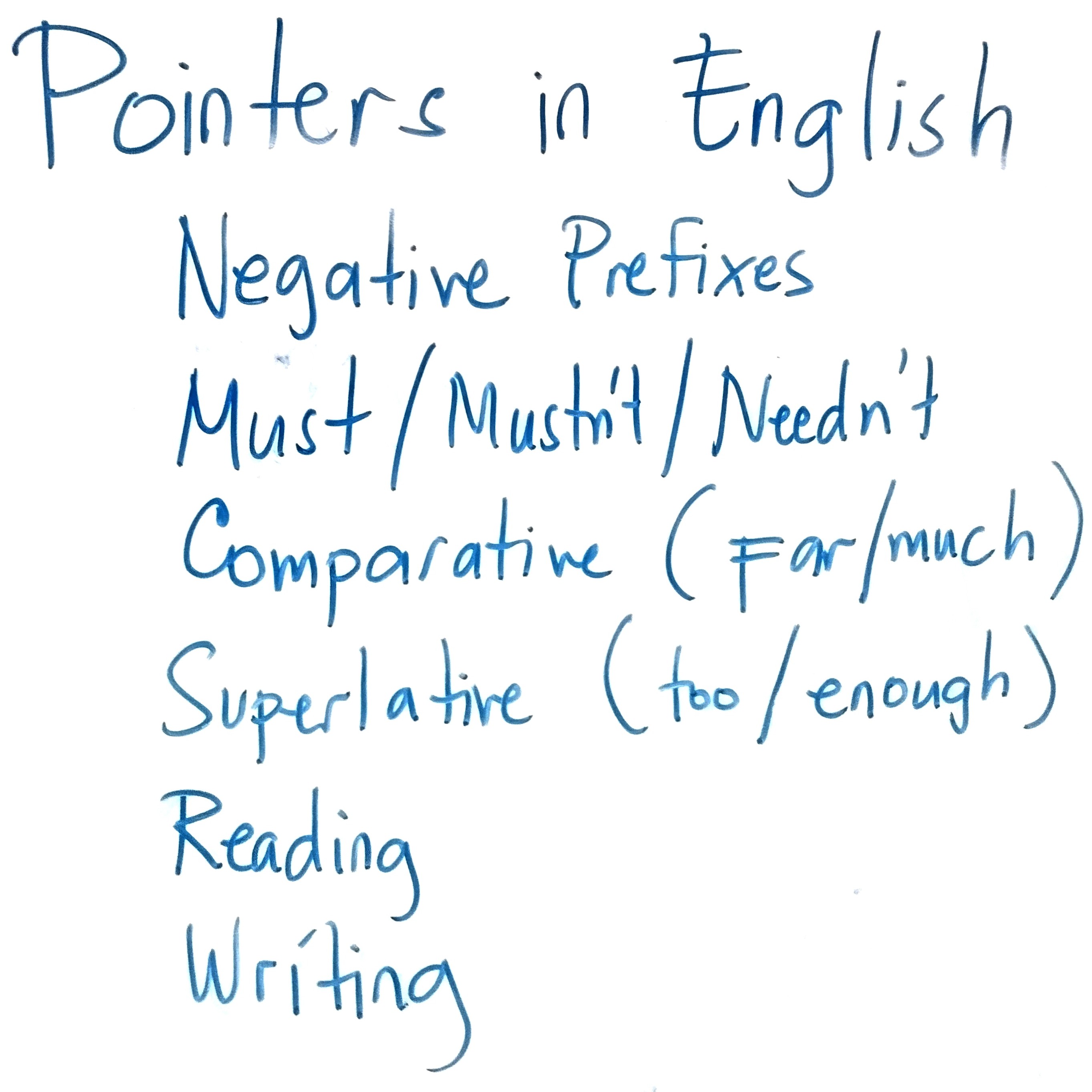
คืออะไร?
Negative Prefixes คือคำเติมหน้าที่ทำให้คำมีความหมายตรงข้ามหรือเชิงลบ
💡 เคล็ดลับ
im- ใช้กับคำที่ขึ้นต้นด้วย p, b, m เช่น impossible, imbalanced
il- ใช้กับคำขึ้นต้น l เช่น illegal
ir- ใช้กับคำขึ้นต้น r เช่น irresponsible
Must (ต้อง / แน่ใจว่า)
ใช้แสดงความจำเป็นหรือความแน่ใจอย่างแรง
✅ You must wear a seatbelt. (กฎ/บังคับ)
✅ She must be tired. (คาดเดาอย่างมั่นใจ)
Mustn't (ห้าม)
ใช้แสดงการห้ามอย่างเด็ดขาด
❌ You mustn't smoke here. (ห้ามเด็ดขาด)
Needn't (ไม่จำเป็นต้อง)
ใช้แสดงว่าไม่จำเป็นต้องทำ (ต่างจาก mustn't)
ℹ️ You needn't bring food. (ไม่จำเป็น แต่ไม่ได้ห้าม)
Comparative คืออะไร?
การเปรียบเทียบระหว่างสองสิ่ง โดยใช้ far / much เพื่อเน้นความแตกต่าง
Far + Comparative
ใช้ far เพื่อเน้นว่าต่างกันมาก
✨ This is far better than before.
✨ She is far more intelligent than him.
Much + Comparative
ใช้ much เพื่อเน้นว่ามากกว่ามาก
✨ He runs much faster than I do.
✨ This bag is much cheaper than that one.
Too (มากเกินไป)
ใช้ too + adjective/adverb = มากเกินไปจนมีผลเสีย
❗ It's too hot to go outside.
❗ She speaks too fast for me to understand.
Enough (เพียงพอ)
adj/adv + enough = เพียงพอที่จะ...
✅ She is tall enough to reach the shelf.
✅ He didn't study hard enough to pass.
⚠️ โครงสร้าง
too + adj + (for sb) + to-infinitive
adj + enough + (for sb) + to-infinitive
กลยุทธ์การอ่าน
1. Skimming — อ่านผ่านๆ เพื่อจับใจความหลัก
2. Scanning — ค้นหาข้อมูลเฉพาะในเนื้อเรื่อง
3. Intensive reading — อ่านละเอียดทุกส่วน
คำถามที่มักออกสอบ
• Main idea / Topic sentence คืออะไร?
• ผู้เขียนมีทัศนคติอย่างไร? (Author's attitude)
• คำในบริบทหมายความว่าอะไร? (Vocabulary in context)
• ข้อใดสรุปได้จากเรื่อง? (Inference)
💡 เคล็ดลับ
อ่านคำถามก่อน แล้วค่อยอ่านเนื้อเรื่อง จะประหยัดเวลาและหาคำตอบได้เร็วขึ้น!
โครงสร้างการเขียน Paragraph
1. Topic sentence — ประโยคหลักที่บอกใจความสำคัญ
2. Supporting sentences — ประโยคสนับสนุน ให้ตัวอย่างหรือรายละเอียด
3. Concluding sentence — ประโยคสรุปหรือย้ำใจความ
Connectors ที่ควรรู้
เพิ่มเติม: furthermore, moreover, in addition
ตรงข้าม: however, on the other hand, nevertheless
เหตุผล: because, since, as a result, therefore
สรุป: in conclusion, to sum up, finally
💡 เคล็ดลับ
หลีกเลี่ยงการใช้ประโยคสั้นๆ ซ้ำๆ ลองใช้ connectors เชื่อมประโยค และอ่านทวนก่อนส่งเสมอ!